 By Emily Parker
Updated November 2026
A high quality cookware set is one that heats evenly, resists warping, holds up to daily use, and suits the way you actually cook. You can judge that before you buy by checking the base material, how the pieces are built, and whether the handles and lids are sized for real kitchen work. This guide walks through each check so you can compare sets on substance rather than appearance.
Start With the Materials
Most of what a pan does well comes down to the core material and how it conducts heat. Stainless steel is durable and non-reactive, but it conducts poorly on its own, so good sets bond a layer of aluminum or copper into the base. Cast iron holds heat exceptionally well but is heavy and needs seasoning. Nonstick coatings release food easily but wear out over time and should not be heated empty or at very high temperatures.
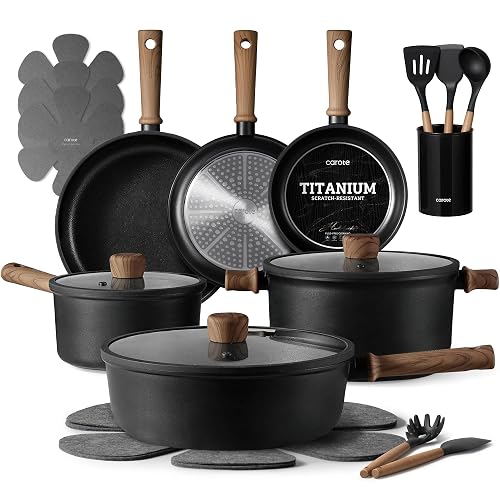
Shopping for one? See our guide: Plateful Titanium Cookware Set Review: Features and Performance.
Look for a set where the description names the construction rather than just the finish. Phrases like “tri-ply” or “fully clad” tell you the heat-spreading layer runs up the sides as well as the bottom, which matters more than a glossy exterior.
Check the Construction and Fit
Pick up each piece and inspect it. A flat, thick base sits fully on the burner and heats evenly. A thin, dished base can warp or hot-spot. Rivets on handles should be smooth on the inside, since rough rivets trap food and wear the cooking surface.
Confirm that lids fit snugly and that the set includes the sizes you will use most. Many home cooks rely on a 10-inch skillet, a 3-quart saucepan, and an 8-quart stockpot, so check that those sizes are present rather than counting total pieces.
Test Handles and Weight
Hold a full pan before you commit. The handle should stay cool enough to grip on the stovetop and feel balanced when lifted. Heavy-gauge pieces offer stability but can be tiring to lift when full, so weigh that against how you cook.
Match the Set to Your Cooking Style
A high quality cookware set should work with your stove and your habits. Induction cooktops require a magnetic base, so confirm compatibility before buying. If you sear often, prioritize thick, heavy-bottomed pieces. If you mostly scramble eggs and simmer sauces, a lighter nonstick skillet may serve you better. Consider oven safety, too; check the maximum temperature the manufacturer specifies, especially for handles and lids.
Care Routine That Protects Your Investment
Even the best set loses performance when cooked on too hot or cleaned with abrasives. Use medium heat for most cooking, preheat stainless pans briefly before adding oil, and let pans cool before rinsing to prevent warping. For nonstick, use wood or silicone utensils and avoid metal scrapers.
Checklist Before You Buy
- Confirm the base construction (tri-ply, fully clad, cast iron, or nonstick).
- Verify the base is flat and thick enough for your burner type.
- Check that the sizes you use most are included.
- Confirm the lids fit and the handles stay cool and secure.
- Verify oven-safe temperature and induction compatibility if needed.
- Read the manufacturer’s care instructions for dishwasher and utensil guidance.
Common Mistakes
- Buying by piece count instead of by the sizes you will really use.
- Overlooking induction compatibility on a new cooktop.
- Cooking nonstick on high heat, which shortens the coating’s life.
- Cooling a hot pan under cold water, which can warp the base.
- Ignoring the handle and rivet quality, which affects daily comfort.
Recommended Gear
- Heavy-duty fish spatula helps you lift delicate food without tearing it or scratching the pan surface. View on Amazon
- Silicone-tipped tongs give you a gentle grip on nonstick and stainless surfaces alike. View on Amazon
- Cookware-safe stainless cleaner removes browning and water spots without scratching the finish. View on Amazon
FAQ
Is stainless steel better than nonstick for a high quality cookware set?
Stainless steel is better for searing, browning, and durability, while nonstick is better for delicate foods like eggs. Many home cooks keep one of each rather than choosing only one.
How can I tell if a pan will work on induction?
Check that the base is magnetic, which you can test with a small magnet. Manufacturers also state induction compatibility on the packaging or product page.
How long should a good cookware set last?
Well-built stainless and cast iron pieces can last for many years with proper care, while nonstick coatings typically wear sooner. Check the manufacturer’s warranty for coverage details.
Conclusion
A high quality cookware set is defined by its base construction, how well the pieces fit your stove and habits, and whether the sizes you need are included. Judge materials, inspect the build, and follow a simple care routine to get years of reliable use. For more comparisons, see What Is the Best Kitchen Cookware Set? A Chef's Buying Guide and Made in Cookware Set: How to Choose the Right One for Your Kitchen.
Related reading
Ready to choose one?
About Emily Parker
Emily Parker is part of our editorial team and reviews and edits our cookware & knives guides, checking product details against manufacturer specifications and owner feedback.