By Emily Parker
Updated November 2026
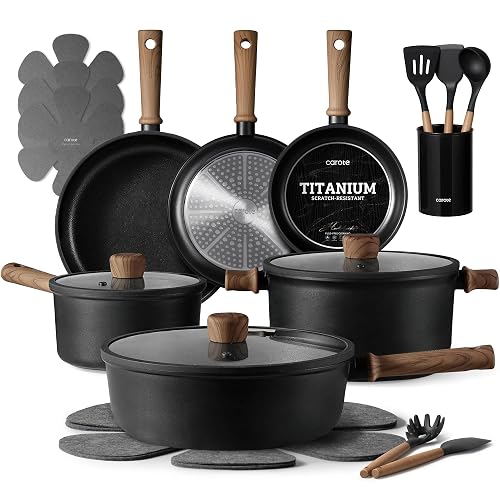
A cookware set ceramic coating gives you a naturally slick cooking surface without the PFAS-based nonstick finish found on many older pans. This guide explains what the coating is, how to judge quality before you buy, and how to cook and clean with it so the surface stays useful for years. Most of the results come down to three things: choosing a well-built set, controlling heat, and keeping the surface clean.
What a Ceramic Coating Actually Is
Ceramic coatings are usually sol-gel finishes, made from silica-based compounds that are applied to aluminum or stainless steel and then cured at high temperature. The result is a smooth, glassy surface that releases food well when it is new. Unlike traditional nonstick, it does not rely on a thick polymer layer, so the coating is thinner and more sensitive to heat and abrasion. Manufacturers generally describe it as a good everyday surface for eggs, pancakes and sautéed vegetables, not as a tool for high-heat searing.
How to Choose a Quality Set
Start with the base metal. Heavier-gauge aluminum or aluminum with a hard-anodized finish conducts heat more evenly and resists warping. Look at the handle attachment as well; riveted handles tend to hold up better than handles held only by adhesive. Check that the set includes the pieces you actually cook with, such as a 10-inch skillet, a 3-quart saucepan and a lidded stockpot, rather than a long list of small items you will never use. Finally, confirm that the coating is rated oven-safe to a specific temperature, since manufacturers’ limits vary widely.
Cooking Technique for Ceramic Surfaces
Ceramic coatings perform best at low to medium heat. Preheat the pan on low or medium for one to two minutes, then add a small amount of fat. Avoid heating an empty pan above medium, because the coating can degrade and lose its release properties. Use wooden, silicone or nylon utensils, and never cut food directly in the pan.
- Set the burner to low or medium-low for most eggs and delicate fish.
- Add about one teaspoon of oil or butter once the pan is warm.
- Place food in the pan and leave it alone for the first minute to form a release layer.
- Lift food with a silicone spatula once it releases easily.
Cleaning and Long-Term Care
Wash the pans while they are still warm, not hot, to reduce thermal stress on the coating. A soft sponge, warm water and mild dish soap are enough for most messes. For stubborn residue, soak the pan for ten to fifteen minutes rather than scrubbing hard. Dry thoroughly before stacking, and place a paper towel or cloth between pans to prevent scratches. Dishwashers are often allowed by manufacturers, but hand washing usually extends the life of the surface.
Signs the Coating Is Wearing Out
Food that starts sticking, a dull or patchy appearance, or visible scratches that flake all indicate that the coating has lost much of its release ability. At that point, cooking with more oil will not fully restore performance, and it is time to replace the piece.
Common Mistakes
- Preheating an empty pan on high, which can permanently damage the surface.
- Using metal utensils or abrasive scouring pads.
- Plunging a hot pan into cold water, which can cause warping or crazing.
- Stacking pans without protection between them.
- Using cooking spray, which can leave a sticky residue that is hard to remove.
Recommended Gear
A silicone spatula is the most useful tool for ceramic pans because it lifts food without scraping the surface. View on Amazon
A soft nylon or non-abrasive sponge helps you clean without wearing down the coating. View on Amazon
Pan protectors, such as felt or soft fabric liners, keep surfaces from touching when stored. View on Amazon
If you are comparing sets, you may find these guides useful: Caraway Non-Stick Ceramic Cookware Set: 6 Best Picks Compared (2026), GreenPan Valencia Pro Ceramic Cookware Set Review: Is It Worth It?, and 5 Best GreenPan Valencia Pro Ceramic Nonstick Cookware Set Options (2026). For a broader view of materials, see What Is the Best Kitchen Cookware Set? A Chef's Buying Guide.
FAQ
Is a ceramic coated cookware set safe to use?
Ceramic coatings are generally considered a suitable nonstick alternative when used within the temperature limits the manufacturer specifies. If you have health concerns about cookware materials, consult a medical or food-safety professional.
How long does a cookware set ceramic coating last?
Lifespan depends heavily on heat, utensils and cleaning habits. Many owners report that careful use extends performance for a few years, but the surface gradually loses release ability over time.
Can I use metal utensils on ceramic pans?
It is best to avoid them. Metal can scratch the coating, which reduces its nonstick performance and can shorten the life of the pan.
Conclusion
A cookware set ceramic coating works well when you choose a sturdy base, cook at low to medium heat and clean gently. Following those habits will keep food releasing easily for as long as the coating holds up. Replace pieces once sticking becomes persistent, and your set will keep performing its best.
Ready to choose one?
About Emily Parker
Emily Parker is part of our editorial team and reviews and edits our cookware & knives guides, checking product details against manufacturer specifications and owner feedback.