By Claire Whitaker
Updated November 2026
The electric knife sharpener Work Sharp line is built around a belt-grinding system that lets home cooks restore an edge in minutes rather than hours. The Work Sharp MK2 Electric Knife Sharpener is aimed at people who own a handful of kitchen knives, maybe a pocket knife or a pair of scissors, and want a repeatable way to keep them working well. It suits cooks who have never sharpened by hand and want a guided, consistent result, or anyone who dislikes the learning curve of whetstones. It is a weaker fit for people with large collections of fine Japanese knives, anyone who wants to refine a convex or highly polished edge by hand, or buyers who expect a true one-minute touch-up on dull blades. Read on for specifications, trade-offs, and a buying guide.

Work Sharp MK2 Electric Knife Sharpener – Adjustable 2-Speed Knife Sharpening System for Kitchen Knives, Pocket Knives, Scissors, Axes & Garden Tools
Product Overview
The Work Sharp MK2 is a benchtop, belt-based sharpening system sold as a combination of an electric motor, a pivoting guide arm, and a set of abrasive belts. Its listing describes it as an adjustable two-speed system for kitchen knives, pocket knives, scissors, axes, and garden tools. In practice, most owners use it for kitchen knives, because the guide arm and belt format are well suited to the straight-edged, medium-thickness blades common in home kitchens.
The core idea is simple. You set the blade in a guide that holds it at a fixed angle, then draw the edge across a moving abrasive belt. Because the angle stays constant from stroke to stroke, the bevel tends to come out even, which is the main thing most people struggle to achieve by hand. The unit is built for a countertop or workbench rather than a drawer.
It is not the same as a hand-held pull-through sharpener or a two-slot ceramic tool. Those are quick but tend to remove metal unevenly and can leave a coarse burr. The MK2 sits closer to a semi-professional workflow: slower, more deliberate, and capable of reshaping a damaged edge, not only touching one up.
Key Features & Specifications
The table below lists features that appear in the product name or are well documented for this model. Where I am not certain of an exact figure, I have left it out rather than guess.
| Feature | What it means for you |
|---|---|
| Electric motor with two speeds | Lets you use a faster speed for material removal and a slower speed for finishing and polishing. |
| Adjustable guide arm | Lets you set the sharpening angle so the bevel matches the original factory angle of your knife. |
| Belt-based abrasive system | Belts come in different grits, so you can start coarse for repair and move finer for polish. |
| Kitchen knife capability | Designed for the straight-edged blades most home cooks own. |
| Multi-tool use | Also accepts scissors, pocket knives, axes, and garden tools, depending on the attachments you use. |
| Benchtop format | Needs a stable surface and clear space for the belt and guide arm. |
Manufacturers typically specify the motor power, belt dimensions, and exact angle range in the printed manual. Check those figures against the box you receive, since packaging and revisions can change over time.
Pros & Cons
Pros
- Angle guide makes it easier to hold a consistent bevel than freehand sharpening.
- Two speeds give you room to repair a damaged edge and then refine it.
- Belt system can reshape a noticeably dull or chipped blade, not only touch it up.
- Works on a range of tools, so it can serve more than just the kitchen.
- Useful for beginners who want a repeatable process without months of practice.
Cons
- Takes more time per blade than a pull-through or ceramic sharpener.
- Requires a dedicated workspace; it is not a drawer gadget.
- Belts are a consumable, so you will need replacements over time.
- Setup and angle calibration take some patience the first few times.
- Can remove metal quickly if used at a coarse grit on a thin blade, so technique matters.
Performance Analysis
Performance depends heavily on what you ask the machine to do. For a knife that has simply gone dull from regular use, owners generally describe the MK2 as effective when they use a medium grit, a light touch, and a consistent number of passes on each side. The guide arm does most of the work of keeping the angle steady, which is where the biggest improvement over freehand sharpening usually comes from.
For a badly damaged edge, such as a chipped tip or a rolled, uneven bevel, the approach changes. Owners who report good results tend to start with a coarse belt, take off only as much metal as needed, and step down through finer grits. The two-speed motor helps here, since a slower setting gives more control during the transition between grits. Rushing this step is the most common complaint pattern: a fast, heavy pass at a coarse grit can overheat a thin blade or leave a wavy edge.
On finishing, the goal is a clean, slightly toothy edge that cuts paper or a tomato cleanly. Finer belts and light pressure on the slower speed are the usual route. Expect the result to be sharp and consistent, though it will not necessarily match a skilled hand-sharpener working on a high-grit stone for a mirror polish.
Setup is a real factor. The angle arm only works as well as the initial measurement and alignment you give it. Owners who take a few minutes to confirm the angle against the existing bevel, and who mark their first few passes, generally get better outcomes than those who skip that step. Ceramic and very hard steel knives may need slower progress and more patience than standard stainless blades.
Who Should Buy This Product?
The MK2 makes sense for home cooks who own several good kitchen knives and want to keep them sharp without learning freehand technique. It also suits people who sharpen other tools, such as garden shears or a pocket knife, and want one system to cover them.
You should skip it if you mainly need a quick touch-up between uses, because a pull-through or honing rod will be faster for that. Skip it too if you have no room for a benchtop unit, or if you enjoy the craft of whetstone sharpening and want full control over the final bevel. Buyers with a single cheap knife may find the investment hard to justify.
Buying Guide
Before you buy any electric sharpener, think through four questions. How many knives need sharpening, and how often? Do you need the tool for only kitchen blades, or for other tools too? How much workspace do you have? And how comfortable are you with setting an angle and adjusting a guide?
Check the belt availability and replacement cost in your region, since belts are the ongoing expense. Look for a model with an adjustable angle guide and at least two speeds if you want room to grow. Read the manual to confirm which blade types and thicknesses the unit handles well.
If the MK2 does not fit your needs, these two alternatives from the same brand line are worth comparing:
-

Motorized Sharpening, Knives and Scissors, Serrated Blades, Variable Speed, Quick Belts Work Sharp Ken Onion Mk2 Electric Knife Sharpener, Adjustable Angle
View on Amazon is a motorized option with variable speed and adjustable angle, aimed at users who want more capacity for scissors and serrated blades.
-
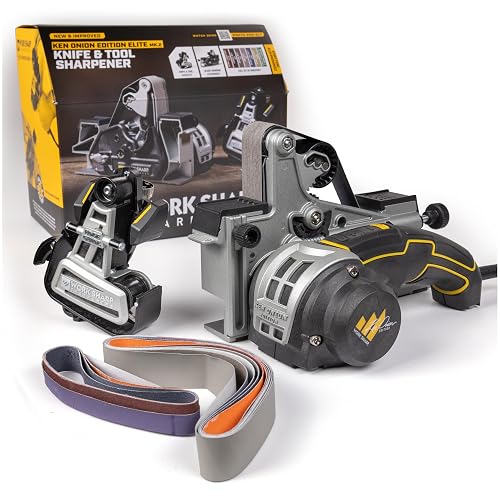
Powered Professional Belt System, Sharpens Scissors, Serrated and Tools, Blade Grinder, Variable Speed Work Sharp Ken Onion Elite Mk2 Electric Knife Sharpener, Adjustable Angle
View on Amazon is a more powerful professional-style belt system with variable speed, suited to heavier workloads.
For further reading, these site guides cover setup and use of the Work Sharp family: Work Sharp Knife & Tool Sharpener MK.2: A Step-by-Step Guide to Sharper Edges, Work Sharp Knife Sharpener Belt: A Step-by-Step Guide for Home Cooks, Work Sharp Knife Sharpener Accessories: A Practical Guide (2026), Work Sharp Precision Adjust Knife Sharpener: Step-by-Step Guide, Work Sharp Combo Knife Sharpener: A Step-by-Step Guide (2026), and 7 Best Work Sharp Tool and Knife Sharpener Models for Home Cooks (2026). If you are weighing a different system, Wüsthof Electric Knife Sharpener: How to Choose and Use One (2026) and Top 5 3 Stage Electric Knife Sharpener Models for Home Cooks offer useful comparisons.
FAQ
Can the Work Sharp MK2 sharpen any kitchen knife?
It handles most straight-edged stainless and carbon steel kitchen knives well. Very thin Japanese blades, serrated knives, and ceramic knives need more care or different tools. Check the manual before running a delicate blade through the system.
How long does one sharpening session take?
A routine touch-up on a lightly dull knife usually takes a few minutes per side. A full repair of a badly damaged edge can take considerably longer, especially at coarser grits where you need to work slowly.
Do I need to set the angle every time?
If you sharpen the same knife at the same angle, the guide setting may stay put. Confirm it each session, because bumping the arm or switching blades can change the angle without you noticing.
How often do the belts need replacing?
Belt life depends on how much metal you remove and how often you sharpen. Owners generally replace belts when they stop cutting efficiently or start loading with metal. Keep a spare on hand so you are not stuck mid-project.
Is it safe to use on a kitchen knife?
The system is designed for household use when you follow the manual. Keep fingers clear of the belt, wear eye protection, and avoid heavy pressure. If you have a physical limitation or are unsure about safe operation, consult a qualified knife professional or the manufacturer.
Will it sharpen scissors and pocket knives too?
The listing names scissors, pocket knives, axes, and garden tools as supported uses. Each tool type needs its own angle and grit approach, so read the attachment and technique notes before switching between them.
Is it better than a manual whetstone?
It is faster and more repeatable for most home users. A skilled whetstone sharpener can achieve a finer polish and more control over the final edge, so the better choice depends on your goals and patience.
Final Verdict
The Work Sharp MK2 Electric Knife Sharpener is a sound choice for home cooks who want a guided, repeatable way to restore kitchen knives and handle a few other tools. Its angle guide and two-speed motor make consistent results achievable without long practice, and its belt system can rescue a neglected edge. The trade-offs are time, bench space, and ongoing belt costs. If your knives are mostly lightly dull, a simpler tool may do the job. If you want a dependable system that grows with your needs, it is worth a close look. View on Amazon
Before you buy: helpful guides
About Claire Whitaker
Claire Whitaker is part of our editorial team and reviews and edits our cookware & knives guides, checking product details against manufacturer specifications and owner feedback.