By Emily Parker
Updated November 2026
A stainless steel cookware set all clad is built around bonded layers of metal, usually an aluminum or copper core wrapped in stainless steel. This guide explains how that construction works, which pieces belong in a well-rounded set, and what to check so you end up with cookware that sears, simmers and cleans up the way you expect. By the end, you will know how to compare sets, what to buy first, and how to keep the pans performing for years.
What “All-Clad” Construction Means in Practice
Most stainless steel cookware is a single thin sheet of steel, which heats unevenly and forms hot spots over a burner. The All-Clad approach, often called fully clad or multi-ply construction, bonds a conductive core to stainless steel so heat spreads across the base and up the sides. The core is typically aluminum in the standard lines and copper in premium lines, and the bonded layers are what give a stainless steel cookware set all clad its even heating.
Manufacturers commonly describe their lines by ply count. A three-ply pan has a core sandwiched between two stainless layers, while five-ply designs add extra conductive layers to improve side-wall heat transfer. More layers generally mean more even heating and a heavier pan, so the right choice depends on how you cook.
Why the Core Matters More Than the Name
Two sets can both be labeled stainless steel and perform very differently. Look for the phrase “fully clad” in the product description, which means the core runs through the base and up the walls rather than only on the bottom. A partially clad pan can still work, but you will feel the difference when you lift the pan or try to brown food evenly across the sides.
Which Pieces Belong in a Well-Rounded Set
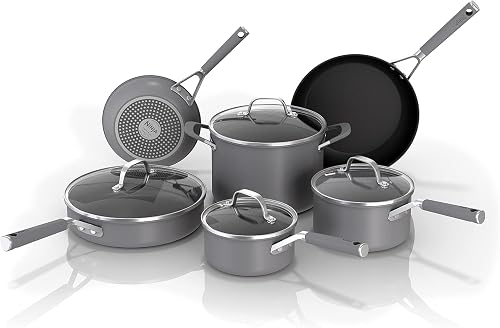
Sets range from small starter groups to large collections with a dozen or more pieces. Pieces that get used daily tend to justify the purchase, while filler items often sit in a cabinet. A practical core lineup usually includes the following.
- A 10-inch skillet for searing, sautéing and pan sauces.
- A 12-inch skillet or fry pan for larger batches and browning proteins.
- A 3-quart or 4-quart saucepan with a lid for grains, sauces and vegetables.
- A 6- to 8-quart stockpot or Dutch-style pot for pasta, soups and stocks.
- Matching lids that fit every pot and pan, ideally with a steam vent.
Oversized sauciers, steamer inserts and specialty pieces are useful for some cooks but can be skipped at first. If you already own a nonstick skillet for eggs, you may not need a second nonstick piece in the set. For a broader overview of set types, see our Stainless Steel Cookware Guide.
Factors to Check Before You Buy
Once you have a sense of the pieces you need, compare sets using the factors below. These are the details that affect daily use more than marketing language does.
| Factor | What to look for | Why it matters |
|---|---|---|
| Construction | Fully clad or multi-ply | Even heating across the base and walls |
| Core material | Aluminum or copper core | Copper heats faster; aluminum is lighter and less costly to produce |
| Handles | Riveted, comfortable grip, oven-safe rating | Determines whether you can finish dishes under the broiler |
| Lids | Tight fit, vented, stainless or glass | Traps moisture and lets you monitor food |
| Cooktop compatibility | Induction-ready base if needed | Magnetic stainless is required for induction |
| Weight | Manageable for your hands | Heavier pans hold heat but are harder to maneuver |
Manufacturers usually specify oven-safe temperatures and induction compatibility on the product page. Check those numbers rather than assuming them, especially if you plan to use the cookware on a glass-top or induction range.
Stainless Interior Versus Nonstick Interior
A stainless steel interior is durable, handles high heat and deglazes well, which makes it ideal for fond and pan sauces. It does require more technique, since food can stick if the pan is not preheated and the oil is not hot enough. Nonstick interiors release food easily but wear out over time and cannot take the same high heat. Many home cooks keep one nonstick skillet beside a stainless set. Our 5 Best Non Stick Stainless Steel Cookware Set Picks for 2026 covers hybrid options in more detail.
Step-by-Step: Using Your Set Without Sticking
Stainless steel rewards good habits. Follow this sequence whenever you sear or sauté.
- Preheat the empty pan over medium heat for 2 to 3 minutes.
- Test readiness by flicking a drop of water into the pan. It should bead and skitter across the surface.
- Add a thin layer of high smoke-point oil, such as avocado or refined canola, and let it shimmer.
- Place the food in the pan without crowding it, and leave it alone for 2 to 4 minutes.
- Flip only when the food releases easily. If it resists, give it another 30 seconds.
- Remove the food, then deglaze with a splash of wine, stock or water to lift the browned bits.
Cleaning and Ongoing Care
Wash pans after they cool slightly, using warm water and a nonabrasive sponge. For stuck-on residue, simmer a tablespoon of baking soda in water for five minutes, then scrape gently with a wooden or silicone spatula. Avoid steel wool, which scratches the surface. Heat discoloration can usually be removed with a stainless-safe cleaner. The Cookware Maintenance Guide: Cast Iron, Carbon Steel, Stainless and Nonstick explains routine care for each material.
Common Mistakes
- Heating the pan on high before adding oil, which causes food to bond to the metal.
- Moving food too early. Stainless releases naturally once a crust forms.
- Using metal utensils on pieces you want to keep looking new, then blaming the cookware.
- Overcrowding the pan, which drops the temperature and steams the food.
- Buying every piece at once. Start with the pans you cook in most often.
Tips for Getting the Most From a Set
Match pan size to the food. A 10-inch skillet suits two chicken thighs, while a 12-inch pan holds a family-size batch of vegetables. Keep lids on the pieces they belong to, since mismatched lids cause most of the frustration with stacked storage. If you are comparing brands with similar layouts, the 7 Best 10 Piece All Clad Cookware Set Options for 2026 shows how the piece counts line up.
Recommended gear
- Silicone-tipped stainless tongs protect the cooking surface while giving you a firm grip on proteins. View on Amazon
- Bar Keepers Friend is a powdered cleanser many cooks use to lift heat tint and restore shine on stainless. View on Amazon
- Wooden or silicone spatulas scrape fond without scratching the interior. View on Amazon
FAQ
Is a stainless steel cookware set all clad worth the investment?
For cooks who sear, braise and make pan sauces regularly, fully clad construction offers more even heating and longer service life than thin single-ply pans. Occasional cooks may be satisfied with a smaller set.
Can I use metal utensils on stainless steel?
Yes, stainless is hard enough to tolerate metal tools, though scraping can leave fine marks. Silicone or wood is gentler on the surface over time.
Does stainless steel cookware work on induction?
Many stainless sets do, but only if the base contains a magnetic layer. Check the manufacturer’s listing before buying, since not every fully clad set is induction-compatible.
Why does my food stick to the pan?
The most common causes are insufficient preheating, too little oil, or moving food before a crust forms. Use the preheat test described above and allow food to release on its own.
How do I remove brown discoloration from the bottom?
Heat tint is usually cosmetic. A paste of baking soda or a stainless-safe cleanser removes most of it. Avoid overheating the empty pan, which causes the discoloration in the first place.
Can stainless steel cookware go in the oven?
Most sets are oven-safe to a specified temperature, often in the range of 500°F or higher, but the lid and handle materials may have lower limits. Always check the manufacturer’s rating.
Is copper core better than aluminum core?
Copper responds faster to changes in burner heat, which suits delicate sauces. Aluminum is lighter and performs well for most everyday cooking. The better choice depends on your technique.
How many pieces should I buy to start?
Begin with a 10-inch skillet, a 12-inch skillet, a 3- or 4-quart saucepan and a larger pot with lids. Add specialty pieces once you know which ones you use.
Conclusion
A stainless steel cookware set all clad works best when you understand how fully clad construction distributes heat and how to use that heat well. Choose pieces that match the meals you cook most, check handles, lids and cooktop compatibility, and build your technique around preheating and patience. With consistent care, a good set can serve you for many years.
Ready to choose one?
About Emily Parker
Emily Parker is part of our editorial team and reviews and edits our cookware & knives guides, checking product details against manufacturer specifications and owner feedback.