Quick answer
Our overall pick is the HOSHANHO 12-inch rod for its versatile length and fine-grit surface. The Henckels steel is a fine-grit classic, the Cutluxe offers a 10-inch length, and the WÜSTHOF model includes a magnetic feature for cleaning.
A honing rod is a key tool for maintaining the edge of your kitchen knives between professional sharpenings. Using the correct honing technique can realign the microscopic teeth on your blade, keeping it cutting effectively. To help you find the right tool, we compared manufacturer listings and specifications for several widely available honing rods.
Our guide to the best honing rods highlights picks based on their listed materials, length, and features. Remember, honing is different from sharpening; for a full explanation, see our article on knife sharpening vs honing.
Our picks at a glance

Pros
- 12-inch length suits a wide range of knife sizes.
- Extra-fine grit surface for honing.
- Ergonomic Pakkawood handle designed for comfort.
- Made from high-carbon steel for durability.
Cons
- The listing does not mention a manufacturer's warranty.
- Hand wash only is implied for care.

Pros
- Fine-grit stainless steel surface.
- Lifetime warranty against manufacturer's defects.
- Smooth polypropylene handle for a secure grip.
- Versatile for kitchen and BBQ knives.
Cons
- Handle is made of plastic.
- The listing does not specify the exact rod length.
Pros
- 10-inch length for most kitchen knives.
- Ergonomic, non-slip Pakkawood handle for all users.
- Lifetime warranty against defects.
- Made from high-carbon stainless steel.
Cons
- Shorter than our overall pick, which may be less ideal for very long blades.
- The listing does not specify the grit type beyond 'extra fine'.

Pros
- Magnetic steel attracts metal filings.
- Ultra-fine grit surface.
- Lifetime warranty against defects.
- Forged from high-carbon stainless steel.
Cons
- At 9 inches, it is the shortest rod in our roundup.
- Handle is made of plastic.
How we chose
Our picks are based on comparing manufacturer listings and specifications on Amazon as of October 2026. We did not test, use, or review these products hands-on. We focused on key criteria: the rod’s material and grit type, its length for compatibility with different knives, the handle material for comfort and grip, and any special features like a magnetic surface or included warranty.
Best Honing Rods: our picks in detail
1. Best overall: HOSHANHO 12-inch Honing Rod
The HOSHANHO 12-inch honing rod is made from Japanese high-carbon steel, which the listing notes is processed with a vacuum heat treatment for hardness and toughness. Its sharpening surface has a fine, uniform sand structure and extra-fine grit designed for quick honing and blade realignment.
The handle is made of Pakkawood and is shaped to fit the curve of the palm for comfort and control. At 12 inches long, the listing states it is suitable for all types of knives, from paring knives to chef’s knives.
Best for: Versatile, all-kitchen maintenance with a comfortable wooden handle.
Pros
- 12-inch length suits a wide range of knife sizes.
- Extra-fine grit surface for honing.
- Ergonomic Pakkawood handle designed for comfort.
- Made from high-carbon steel for durability.
Cons
- The listing does not mention a manufacturer’s warranty.
- Hand wash only is implied for care.
2. Best for a fine-grit classic: Henckels Fine Edge Honing Rod
The Henckels honing rod is designed for maintaining knife edges between professional sharpenings. It features a fine-grit stainless steel rod and a smooth polypropylene handle that offers a secure grip.
The listing promotes it for regular use on kitchen or BBQ knives. This model is backed by a lifetime guarantee against manufacturer’s defects.
Best for: Those seeking a trusted brand name with a fine-grit surface and a lifetime warranty.
Pros
- Fine-grit stainless steel surface.
- Lifetime warranty against manufacturer’s defects.
- Smooth polypropylene handle for a secure grip.
- Versatile for kitchen and BBQ knives.
Cons
- Handle is made of plastic.
- The listing does not specify the exact rod length.
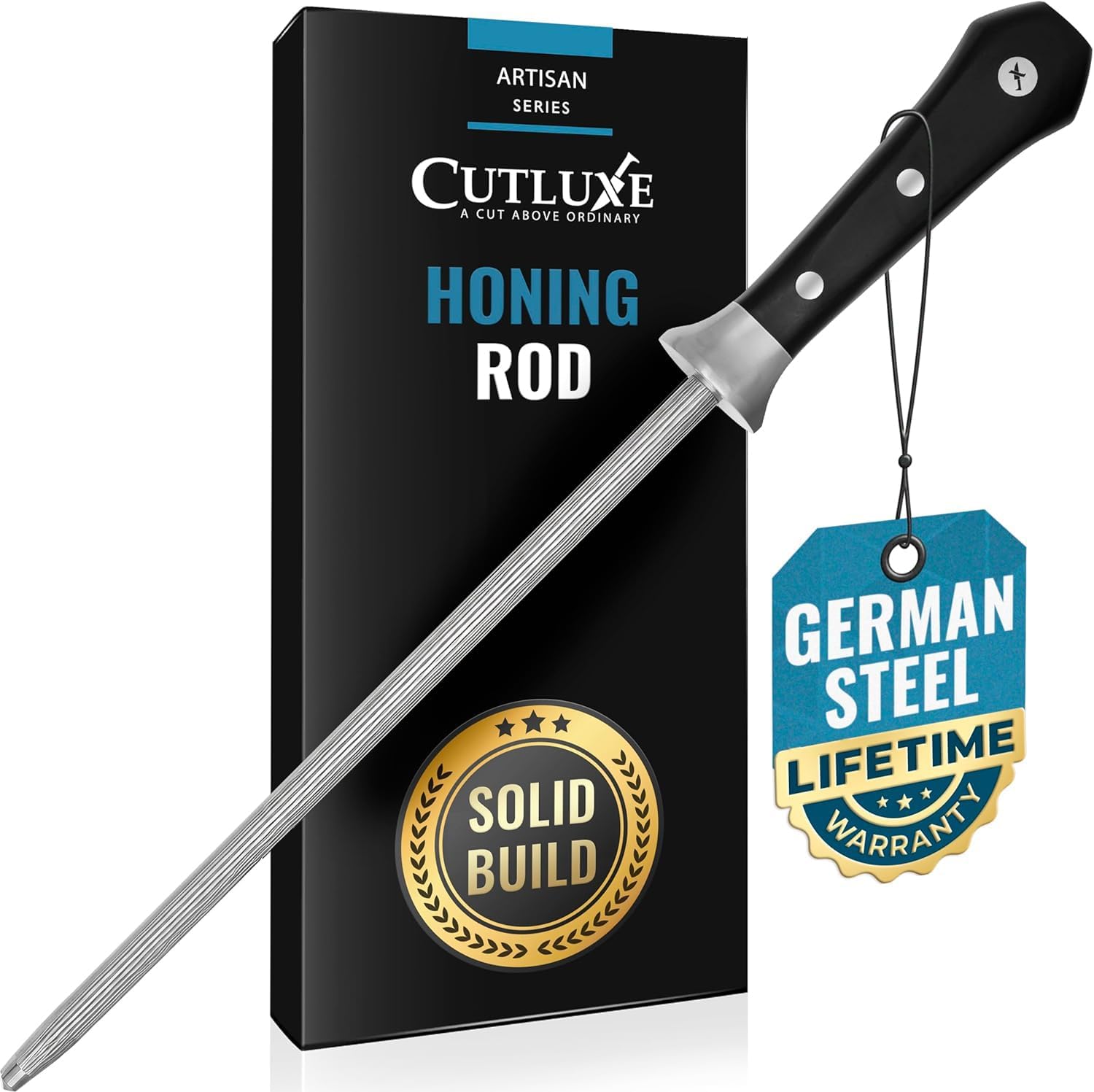
3. Best for a 10-inch option: Cutluxe 10-inch Honing Rod
The Cutluxe honing rod is a 10-inch model constructed from high-carbon stainless steel, which the listing says resists rust and corrosion. It features an ergonomic Pakkawood handle designed to be non-slip and suitable for both right- and left-handed users.
The listing states the rod comes with a lifetime warranty against material or workmanship defects. It is promoted as a tool for honing and realigning knife edges.
Best for: A slightly shorter rod with an ambidextrous wooden handle and a lifetime warranty.
Pros
- 10-inch length for most kitchen knives.
- Ergonomic, non-slip Pakkawood handle for all users.
- Lifetime warranty against defects.
- Made from high-carbon stainless steel.
Cons
- Shorter than our overall pick, which may be less ideal for very long blades.
- The listing does not specify the grit type beyond ‘extra fine’.
4. Best for magnetic cleaning: WÜSTHOF 9-inch Honing Steel
The WÜSTHOF honing steel is a 9-inch rod forged from a single block of high-carbon stainless steel. It features an ultra-fine grit surface and includes a magnetic property that attracts loose metal fibers during sharpening for cleaner use.
The rod comes with a plastic handle and is backed by a lifetime warranty against manufacturer’s defects. The listing states it is for sharpening dull knives, scissors, and cutters.
Best for: Those who want a magnetic rod for cleaner honing and a trusted German brand.
Pros
- Magnetic steel attracts metal filings.
- Ultra-fine grit surface.
- Lifetime warranty against defects.
- Forged from high-carbon stainless steel.
Cons
- At 9 inches, it is the shortest rod in our roundup.
- Handle is made of plastic.
Our honing rod picks at a glance
| Model | Length | Grit Type | Handle Material | Key Feature |
|---|---|---|---|---|
| HOSHANHO 12-inch | 12 inches | Extra Fine | Pakkawood | Versatile length, ergonomic handle |
| Henckels Fine Edge | Not listed | Fine | Polypropylene (plastic) | Lifetime warranty |
| Cutluxe 10-inch | 10 inches | Extra Fine | Pakkawood | Ambidextrous handle, lifetime warranty |
| WÜSTHOF 9-inch | 9 inches | Ultra Fine | Plastic | Magnetic rod |
How to choose a honing rod
Selecting the right honing rod depends on your knives and how you use them. The primary purpose of a honing rod is to realign the edge of your blade, not to sharpen away metal. For a deeper dive into this distinction, read our guide on knife sharpening vs honing.
What to look for
- Length: The rod should be at least as long as the blades you use most often. A 10- to 12-inch rod is versatile for everything from paring knives to chef’s knives.
- Grit and Surface: Honing rods have a fine, ultra-fine, or extra-fine abrasive surface. A finer grit is gentler and ideal for frequent maintenance on quality steel.
- Handle: Look for a secure, comfortable grip. Wooden handles like Pakkawood are durable and offer good grip, while plastic handles are often lighter. An ergonomic shape can reduce fatigue.
- Material: Most rods are made of hardened steel, often high-carbon or stainless steel, for durability. Some feature a magnetic surface to catch metal particles.
- Warranty: A lifetime warranty can indicate manufacturer confidence in the product’s durability against defects.
Proper storage is also part of knife care. After honing, store your knives safely in a block, on a magnetic strip, or in blade guards. Learn more in our knife storage guide.
FAQ
What’s the difference between honing and sharpening?
Honing realigns the microscopic teeth on a knife’s edge that bend with use, restoring a sharp feeling. Sharpening actually grinds away metal to create a new edge. You should hone your knives frequently (even every few uses), but only sharpen them when honing no longer works. For a full explanation, see our article Knife Sharpening vs Honing.
How often should I use a honing rod?
Frequency depends on use. For home cooks, honing a knife every few times you use it can help maintain the edge. Professional chefs may hone before each use. Regular honing extends the time between necessary professional sharpenings.
Can a honing rod damage my knife?
If used incorrectly, yes. Using too steep an angle or too much pressure can dull or even chip the blade. Always follow the manufacturer’s guidance for your specific knives and use a consistent, gentle angle. The goal is to glide the blade down the rod, not to saw into it.
What length honing rod do I need?
Choose a rod that is longer than your longest commonly used knife blade. A 12-inch rod is a safe, versatile choice for most home kitchens, accommodating chef’s knives and longer slicers. A 9- or 10-inch rod may suffice if you primarily use shorter blades.
References
- Amazon product listings and manufacturer specifications (accessed October 2026)
- Knife Care – The Cook’s Kitchen
- Knife Sharpening vs Honing – The Cook’s Kitchen
- Knife Storage Guide – The Cook’s Kitchen