Quick answer
Uneven heating is often caused by warped cookware, a mismatch between pan and burner size, or a faulty stove element. You can fix it by using flat-bottomed pans, matching pan size to the burner, preheating properly, and using a heat diffuser for delicate tasks.
Few things are more frustrating than a meal cooked unevenly—scorched on one side, raw on the other. Understanding how to fix uneven heating on stove setups starts with knowing why it happens. The problem usually isn’t one single failure but a combination of the cookware’s material and shape, the heat source’s characteristics, and our technique. By applying some basic principles of heat transfer and pan geometry, you can regain control and cook more predictably.
Diagnose the Source of the Problem
Before you can fix uneven heating, you need to identify the culprit. The issue typically stems from the cookware, the stove, or the interaction between the two.
Check for Warped or Damaged Cookware
A warped pan is a primary cause of poor heat contact. Place your empty pan on a perfectly flat, cool surface like a glass stovetop or a granite countertop. Try to rock it. If it spins easily or you can see daylight under the center, the pan is warped. This creates an air gap that severely disrupts heat transfer from the burner to the pan, creating a cold spot directly over the warp. Warping is often caused by rapid temperature shocks, like running a hot pan under cold water.
Evaluate Burner-to-Pan Compatibility
Using a small pan on a large burner forces the flames or heating element to lick up the sides, overheating the edges while the center lags. Conversely, a large pan on a small burner creates a hot spot only in the center, leaving the outer edges too cool. The ideal match is a pan whose flat cooking base sits fully within the boundary of the burner’s active heating area, or just slightly larger.
Understand Your Stovetop Type
Different stoves have inherent heat patterns. Electric coil and solid disk burners often have pronounced hot spots directly over the coil. Gas burners provide more even radial heat but can have a ring pattern. Induction cooktops are exceptionally even but require perfectly flat, magnetic pans to work at all. A burner that is failing—like an electric coil with a broken section or a gas burner with clogged ports—will also create uneven heat.
What to look for
- Pan Flatness: Test on a known-flat surface. No rocking or spinning.
- Size Match: Pan base should fit within the burner’s active zone.
- Burner Health: Look for uneven flames or glowing electric coils.
- Material Response: Thin pans heat and cool quickly, making hot spots more pronounced.
Practical Techniques to Fix and Manage Uneven Heat
Once you’ve diagnosed the likely cause, you can apply specific techniques to counteract uneven heating. This is the core of how to fix uneven heating on stove problems in real-time cooking.
Master the Art of Preheating
Proper preheating allows the entire pan to reach a more uniform temperature before food is added. For most tasks, preheat your pan over medium heat for several minutes. A common test is to sprinkle a few drops of water in the pan; if they bead up and skate across the surface, the pan is ready for many types of cooking. Avoid the high-heat blast, which can cause thermal shock and warp thin pans while creating extreme hot spots. For more on managing heat, see our guide on preventing overheating in cooking oils.
Use a Heat Diffuser
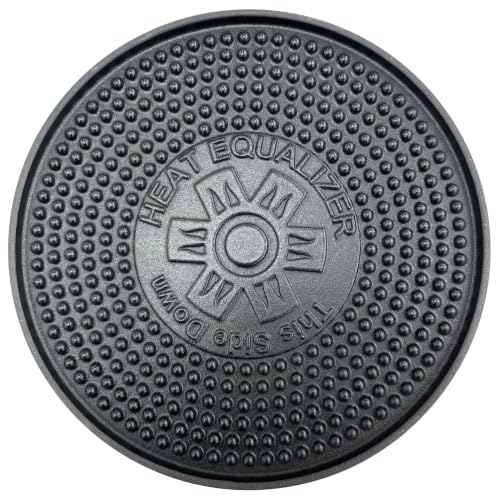
A heat diffuser is a simple, flat metal disk placed between the burner and the pan. It acts as a thermal buffer, absorbing and spreading the heat more evenly. This is an excellent tool for delicate tasks like melting chocolate, simmering sauces, or using a thin, warped pan you can’t immediately replace. It’s also useful on electric coil stoves to mitigate their pronounced hot spots.
Adjust Your Cooking Technique
You can work with your stove’s characteristics. For a burner with a strong center hotspot, stir or rotate food more frequently. When searing meat, don’t overcrowd the pan, as this causes a massive temperature drop and uneven cooking. Instead, cook in batches. For oven cooking, where even heating is also crucial, understanding oven temperature accuracy is key.
| Problem | Likely Cause | Solution |
|---|---|---|
| Food burns in center, raw at edges | Pan too small for large burner | Use a larger pan or smaller burner setting |
| Center cooks slowly, edges burn | Pan too large for small burner | Use a smaller pan or a heat diffuser |
| Random, inconsistent hot spots | Warped pan bottom | Test pan flatness; replace if warped |
| Distinct ring pattern on food | Gas burner ring pattern or electric coil shape | Stir frequently; use a heat diffuser; preheat longer |
Choose the Right Cookware Material
Material science plays a huge role. Thin, lightweight pans (like some aluminum or stainless steel) heat and cool rapidly, amplifying hot spots. Pans with a thick base or those made from clad materials (like aluminum sandwiched between stainless steel) or cast iron absorb heat more slowly and distribute it more evenly across the cooking surface. For a deep dive into temperature control, explore our cooking temperature resources.
Safety
Always follow manufacturer instructions for your stove and cookware. Never leave a heat diffuser unattended on an active burner, as it can become extremely hot. If you suspect a faulty burner element or gas flow issue, contact a qualified appliance repair professional. For all meat, poultry, and seafood, ensure it reaches the safe minimum internal temperatures as defined by the USDA Food Safety and Inspection Service. A reliable kitchen thermometer is essential for this check.
Frequently Asked Questions
Can a warped pan be fixed?
It is very difficult for a home cook to reliably fix a warped pan, and attempting to do so can damage it further or create a safety hazard. For inexpensive pans, replacement is often the most practical option. Some high-end manufacturers may offer re-surfacing services. Prevention—avoiding thermal shock and excessive high heat—is the best strategy.
Is uneven heating worse on electric vs. gas stoves?
Each type has its challenges. Traditional electric coil burners often have more concentrated, uneven heat patterns directly on the coil. Gas burners provide more immediate and adjustable heat that can be more even radially, but they can still have hot rings. Induction cooktops generally provide the most even heating, as the magnetic field directly energizes the entire pan base.
How do I know if my burner is broken and causing uneven heat?
For gas burners, look for an uneven flame pattern, yellow tipping on the flames (which can indicate a clog), or flames that don’t ignite all the way around. For electric coils, look for sections that don’t glow red-hot. If one burner performs significantly differently than others of the same size on your stove, it may be failing. Consult your stove’s manual and consider professional service.
Does pan color affect heating evenness?
On the stovetop, the color of the pan’s exterior has a negligible effect. What matters is the material, thickness, and flatness of the cooking surface. However, in the oven, darker pans will absorb radiant heat more readily than shiny ones, which can affect browning—a topic covered in our broader temperature troubleshooting guide.
Should I constantly move food around to combat hot spots?
It depends on the goal. For dishes where browning is desired (like searing a steak or getting a crust on pancakes), let the food sit undisturbed to allow the Maillard reaction to occur. Then move or flip it. For dishes like stir-fries or sauces, constant motion is part of the technique and naturally evens out heating. Adjust your technique based on what you’re cooking.
References
- USDA Food Safety and Inspection Service: Safe Minimum Internal Temperature Chart, https://www.fsis.usda.gov/food-safety/safe-food-handling-and-preparation/food-safety-basics/safe-temperature-chart
- Manufacturer manuals and specification sheets for stoves and cookware